When Trump Says "National Interest," Putin Collects

Oct 23, 2026 · @Wayne Ince
Deck: The president's Russia sanctions waiver is the latest entry in a record that keeps handing Vladimir Putin money, time, leverage, or relief while Ukraine is told to wait, bend, and bleed.
By Wayne Ince | Tampa, Florida
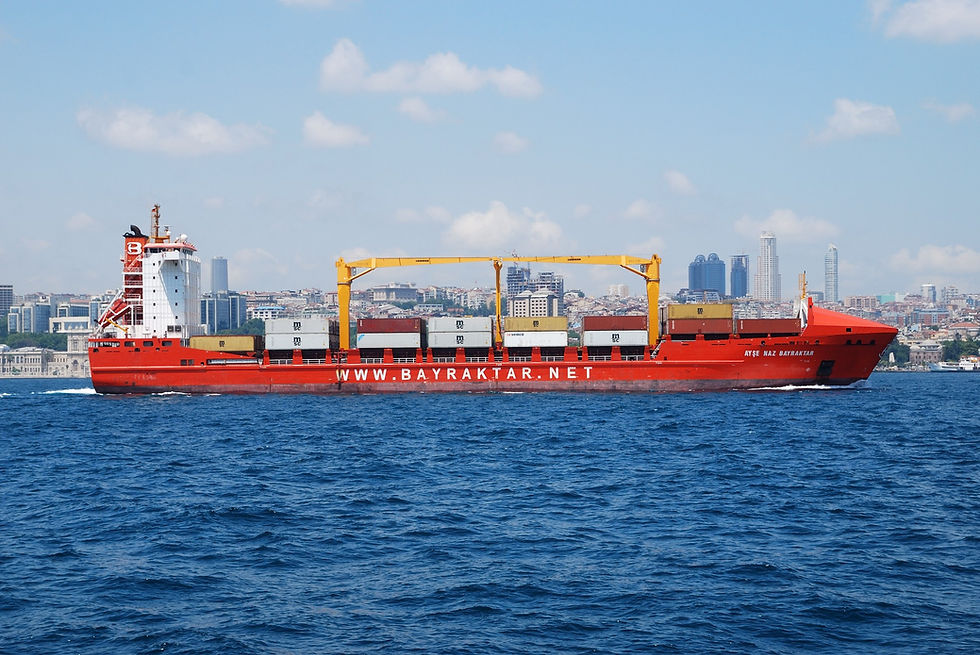
On October 22, a Malta-flagged tanker called the Agioi Fanendes took on about 40,000 metric tons of diesel at Primorsk, Russia's Baltic oil port. It is bound for New York. Ship-tracking data says it docks November 7, four days after Election Day.
Six days before that tanker loaded, President Donald Trump had a weapon aimed at Vladimir Putin's war machine. Congress built it. Trump signed it. Then, two days before its tariffs were set to fire, he unloaded it.
The Lindsey O. Graham Sanctioning Russia and Iran Act was built to hit Russian officials, state-linked banks, energy interests, sanctions evaders, and the countries still feeding Moscow's oil-and-gas revenue. Trump's October 16 executive order waived the law's operative Russia sanctions, restrictions, and duties, including a 500 percent tariff on Russian goods and tariffs of up to 100 percent on the biggest buyers of Russian energy. Sanctions imposed under earlier executive orders remain. The new pressure Congress ordered, in a bill that passed the Senate 86 to 11, now sits on a shelf with no expiration date until Trump or his secretary of state decides to take it down. Even the ban on buying Russian sovereign debt, in force since September 18, is waived.
Graham's law does let a president waive it, but only if he certifies to Congress that the waiver serves the national interest. Trump's order says that certification was made. It never tells the public what that interest is. Secretary of State Marco Rubio said afterward that Trump would take up to 60 days to weigh the global economic impact. Sixty days is a long time on a battlefield, and Putin will use every one of them.
This favor has company. A week earlier, Trump announced a diesel arrangement with Moscow, and Treasury temporarily waived sanctions on Russia's energy sector, opening another revenue channel for the government financing the invasion of Ukraine. Diesel is running around $6.30 a gallon, and that pain is real for every trucker and farmer paying it. But the first shipment Trump advertised was 300,000 metric tons. By NBC News's math, that is less diesel than American transportation burns in a single day. It will not move the pump price. It will move money to Moscow.
That tanker will not even arrive before you vote. Voters get the headline before the midterms. Putin gets paid. The fuel docks after the polls close.
Twelve senators, six of them Republicans, wrote Trump that the deal "is a gift to our adversary and a betrayal of our Allies." Democrats did not write that alone. Mitch McConnell, Susan Collins, Lisa Murkowski, John Cornyn, Thom Tillis, and Alan Armstrong signed the letter. Republican senators are saying out loud what too many party loyalists keep swallowing: the deal helps Moscow and weakens Ukraine.
Now stack the receipts. In March 2025, Trump paused military aid to Ukraine and cut intelligence sharing, including information Ukraine used to defend itself against Russian missile attacks and to strike Russian forces. The pause lasted about a week and ended when Kyiv agreed to ceasefire talks in Jeddah. Kyiv got squeezed until it bent. Moscow gets an open-ended review.
In October 2026, he opened the door to Russian diesel revenue and waved off warnings that the money could buy more bombs. Asked whether anyone had assured him Russia would not spend the money on weapons, Trump said, "Nobody has told me anything."
Then came the Graham Act waiver. Sanctions on officials, banks, state entities, energy projects, financial transfers, sovereign debt, and sanctions-evasion networks were supposed to tighten the vise. Trump loosened it before Putin had to feel the squeeze.
And Ukraine? The day after Trump announced the diesel deal, Russian aerial bombs hit homes in Ukraine's Zaporizhzhia region and killed at least 12 people, three of them children. Ukraine gets lectures. It gets its intelligence stopped, its military aid paused, and its elected president told by Trump that the country should get a new leader. Its defense is treated as the inconvenience standing between Trump, cheaper fuel, and another handshake with the Kremlin. Russia launched the invasion. Russia occupies Ukrainian territory. Russia keeps hitting Ukrainian infrastructure. Yet Washington keeps finding new ways to make Kyiv prove its gratitude while Moscow gets another 60 days.
That is not leverage. It is capitulation wearing a red tie.
Trump has spent years calling the Russia investigation a hoax. The underlying fact was never a hoax: Russia interfered in the 2016 election. Robert Mueller called that interference "sweeping and systematic." The Republican-led Senate Intelligence Committee concluded that the Kremlin ran an "aggressive, multifaceted effort to influence, or attempt to influence," the election.
The record also requires honesty. Mueller did not establish a criminal conspiracy between the Trump campaign and the Russian government. Marco Rubio, then the committee's acting chairman, said it found no evidence that Trump or his campaign colluded with Moscow.
Both facts fit in the same paragraph. Russia interfered. Criminal conspiracy was not established. Trump uses the second fact to erase the first and calls it vindication. I call it misdirection.
None of this proves Trump owes Putin a secret favor. No verified public evidence establishes that debt, financial or otherwise, and honest criticism should say so plainly. But presidents are not judged only by what prosecutors can prove about a hidden arrangement. They are judged by what they do with American power in public.
Judged that way, the history matters. The bipartisan Senate investigation found that Paul Manafort's access gave Russian intelligence openings into the campaign, that Russia worked the transition team's inexperience through unofficial channels, and that WikiLeaks played a key role in the influence operation. Against that record, the public pattern is compromising enough.
I wore the uniform for 23 years, with deployments to Bosnia and Kosovo. Pressure on an aggressor works only when the aggressor believes it will hold. Putin just learned this pressure bends.
A president whose political rise benefited from an influence campaign ordered by America's adversary should be more careful than anyone about appearing to reward that adversary. He should build distance with steel. He should demand proof, impose costs, defend the democracy under attack, and make every decision open enough to survive public suspicion.
Trump does the opposite. He denies established interference. He attacks the institutions that documented it. He treats Ukraine, a democratic partner resisting invasion, as the troublesome party. He lifts pressure on Russian fuel. He waives congressional sanctions. He hands Putin what every autocrat wants from an American president: division at home, doubt among allies, money for the regime, and time on the battlefield.
Call it favoritism. Call it appeasement. Call it reckless transactional politics driven by fuel prices and midterm panic. Pick the label. Putin gains, America's standing shrinks, and Ukraine pays in blood.
The burden now belongs to Congress, including every Republican who voted for the Graham Act and meant it. Demand the administration's full national-interest justification. Put Rubio's 60-day review under oath. Force a public accounting of the diesel arrangement: its legal basis, its expected effect on prices, and the revenue it delivers to Moscow. Restore the sanctions unless the White House can show, with evidence, that Putin has made a concession worth the relief.
Anything less tells the world that American law holds firm until Donald Trump decides Vladimir Putin needs another favor. That is not America First. That is Putin paid first.


Comments